Data Integration & Enrichment
Data extracts from SAP, Infor, Oracle, or other ERP systems. Supplier data buried in SRM. Trend charts scattered across Power BI. Sound familiar?
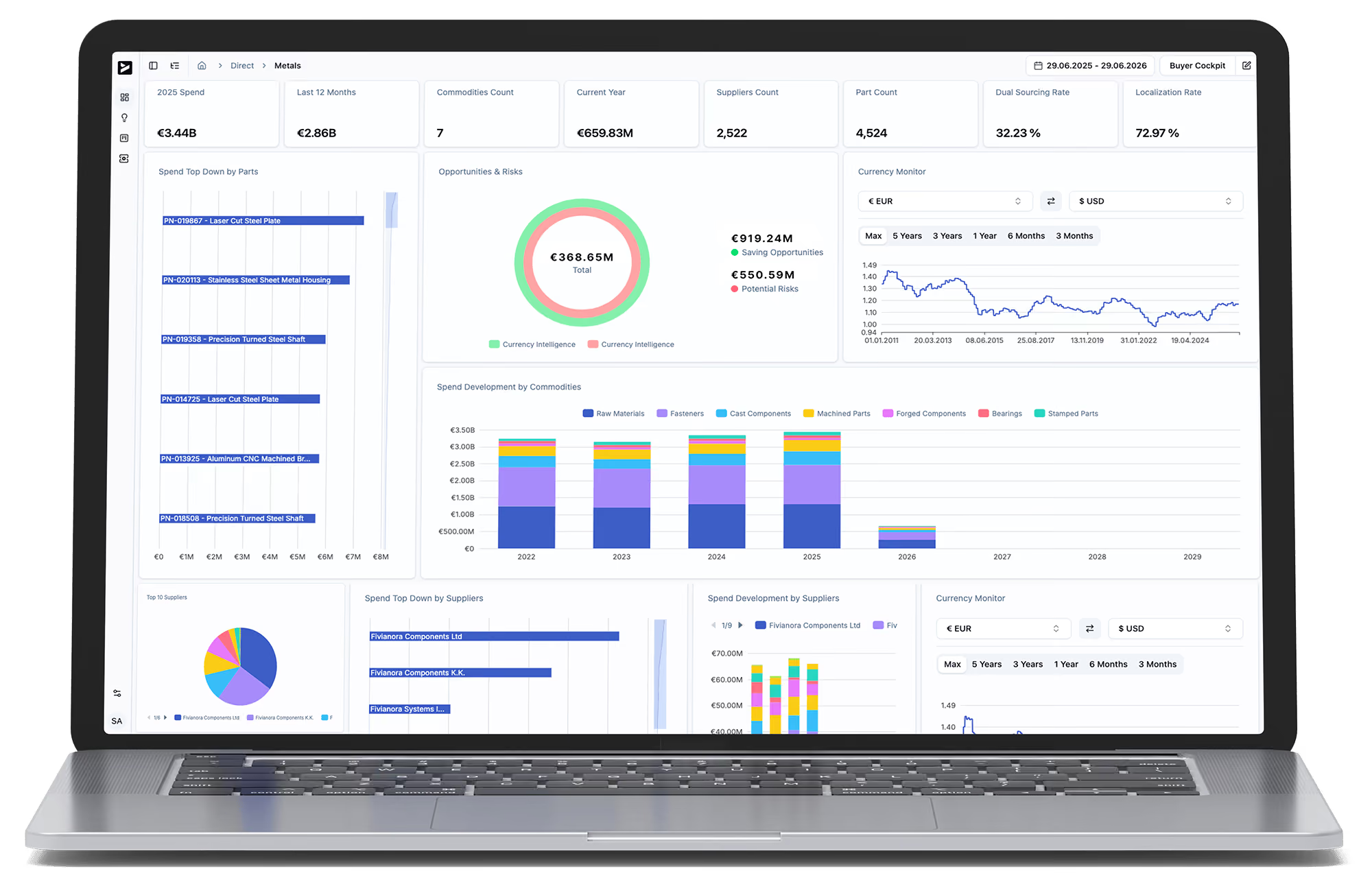
Decentralized data sources make data integration and enrichment more critical than ever in procurement. Our software brings your data together — enriched with relevant market data — into one end-to-end solution for strategic purchasing, cutting system disruptions and helping your team work more efficiently.
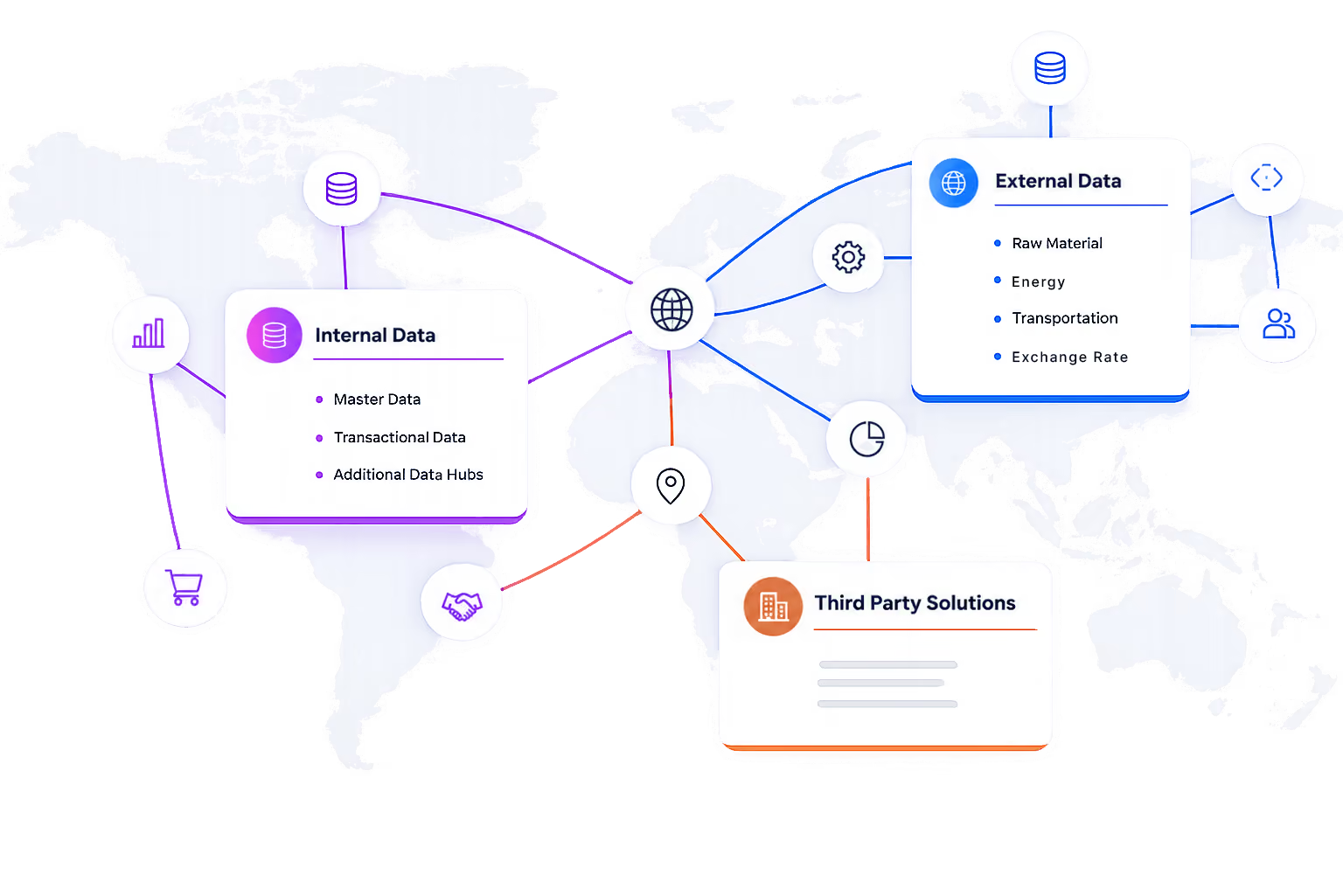
Decentralized data
as a central procurement solution.
Data Integration
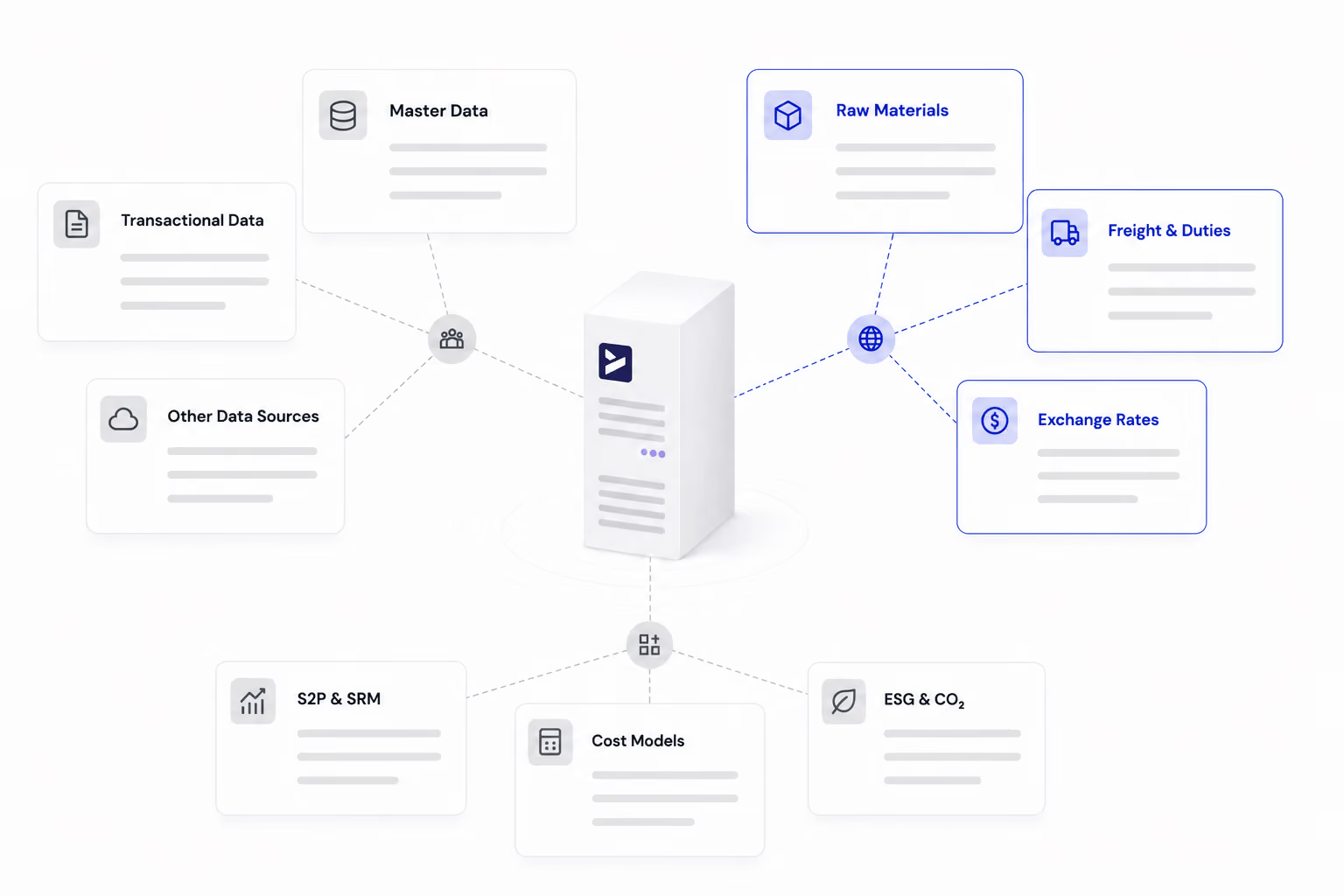
All your internal transactional and master ERP-data, such as supplier master data, parts master data and purchase orders are imported automatically, cleansed and centrally stored.
Target prices, greenfield analyses or shadow calculations and supplier and product group targets can also be imported.

Data Enrichment
External market data such as commodity prices, customs duties, exchange rates as well as energy and logistics costs are constantly fed in live via an external interface and assigned to the individual product groups or parts.
Third Party Solutions
Third-party solutions and operational procurement solutions for S2C, P2P, SRM, ESG, risk management or sustainability can also be integrated into ivoflow - the basis for a successful procurement analytics solution.

Your Benefits
- Away from system breaks towards more efficiency
- Integration of all relevant procurement data
- End-to-end solution: from data to strategy implementation


"ivoflow provides us with traceability of the material flows from all suppliers to our plants worldwide, as well as within the Hengst Group itself. As needed, reports containing the required purchasing information for specific product groups, suppliers, or items can be selected and exported as an Excel file – for individual plants, regions, or defined time periods. This enables us to quickly and easily identify synergies. ivoflow’s customer support responds promptly to inquiries, acts pragmatically, and provides user-friendly assistance – exactly as it should be."








See how ivoflow works
Experience firsthand how our solution can streamline your workflow and boost efficiency.
Try Our DemoFAQ
What does data integration in procurement mean?

Data integration in procurement describes the process of bringing together, cleansing, and standardizing data from various internal sources — for example ERP, SRM, or S2P systems. Company data is often organized in a decentralized way, resulting in a complex IT landscape. In day-to-day work, this leads to system breaks, since there is no single source of truth: a central source that consolidates all data and serves as the leading system.
What does data enrichment in procurement mean?
Once a system has been designated and implemented as the single source of truth, it can be enriched with additional external information, typically via interfaces. The goal is to create a consistent, complete, and context-rich data foundation that enables better analyses, well-founded decisions, and more efficient business processes. Typical external data includes market information, material prices, tariffs, exchange rates, or logistics data.
How does data integration of SAP data work in strategic procurement?
Data integration of ERP data (e.g. SAP) in strategic purchasing is an elementary process that helps companies make data-based decisions, increase the efficiency of their procurement, and reduce costs. As one of the leading ERP systems, SAP is used by many companies worldwide for their business processes, including purchasing. Data integration of SAP data in strategic purchasing ensures a seamless flow of information between different SAP modules and other systems used in strategic purchasing. This integrative approach enables companies to efficiently collect, analyze, and use purchasing data to make strategic decisions and realize value creation potential. As part of data integration in strategic purchasing, various SAP modules are linked together — for example the Materials Management module (MM), Supplier Relationship Management (SRM), and Business Warehouse (BW). By integrating these modules, companies can seamlessly manage and control the entire procurement process, from requirements planning through supplier evaluation to invoice processing. ivoflow automatically imports all existing internal transaction and ERP master data — such as supplier master data, parts master data, and order data — from your systems into the software, cleanses the data, and stores it centrally.
Why is data integration important in procurement?
Data integration is important so that internal company data and external market data are not viewed in isolation but are systematically consolidated and analyzed. Only this way can trends be identified early, risks minimized, and well-founded decisions made. In many companies, internal and external data are kept separate and go unused. Internal data typically comes from ERP systems like SAP, including orders, framework agreements, and goods receipts — examples include category and spend analyses, historical price and volume trends, supplier dependency, and process metrics. External data includes, for example, material and energy costs from platforms like Matflix or exchange rate data from XE. Combining internal and external data provides a complete picture of the procurement situation, strengthens negotiating position, and supports strategic planning. Key priorities include consolidating all relevant systems, such as ERP, SRM, and databases, centrally, avoiding data silos, cleansing duplicates, and introducing standardized formats. Centralized data hubs or platforms further enable cross-company analyses, while data quality must be continuously ensured through automated validation, cleansing, and harmonization — preventing error sources such as incorrect units of measure, incomplete entries, or duplicate supplier master records. High data quality is the foundation for reliable analyses and AI applications in procurement.
Which third-party solutions can be integrated into ivoflow as part of data integration?
Various system types can be integrated into ivoflow. From SRM (Supplier Relationship Management) systems, master data and supplier interactions can be imported to build a complete supplier profile. In Sourcing/S2C (Source-to-Contract), data on tenders, contract management, and supplier selection can be integrated to support strategic sourcing decisions and automate price comparisons. From P2P (Procure-to-Pay) systems, transaction data such as purchase orders, invoices, and payments can be imported to make the entire procurement process transparent. Information on supplier risks, such as financial stability or delivery reliability, can be incorporated from risk management systems to enable well-founded risk assessments, and environmental, social, and governance data can be imported from ESG/sustainability management systems to support sustainable sourcing decisions.
Which external market data can be integrated as part of data integration?
External market data that can be integrated includes raw material and commodity prices, such as metals like aluminum, copper, and steel based on benchmarks like LME and SHFE, plastics like polyethylene and polypropylene based on indices like Tecnon and Platts, rubber and elastomers via references such as the Rubber Board Price and SICOM Natural Rubber, and chemicals via the ICIS Chemical Price Indices. It also includes exchange rates such as EUR/USD or USD/CNY, which are relevant for import/export calculations, as well as country- and product-specific tariffs and trade duties, and transport and energy costs such as electricity, oil, and gas prices. The added value lies in well-founded analyses of cost trends over time, early detection of price fluctuations and supply chain risks, optimized negotiations and benchmarking, and support for strategic purchasing decisions and forecasts. External market data can be assigned to product categories or parts automatically or manually. If key data such as HS codes are missing, industry-standard default values are used.
Which master data/reference data is fed in as part of data integration?
Data integration typically feeds in supplier master data with information about suppliers, as well as parts or item master data covering product parts, components, and goods. This is complemented by the category structure, including categories, subcategories, part families, and category codes. Optionally, target prices, shadow calculations, and internal calculation data per supplier or category, such as internal target price guidelines, can also be imported.

Want to know more
about our procurement solution?
Let us show you how ivoflow can support your business. We are ready to showcase our procurement management system. Together we will find the perfect solution for your company. Feel free to give us a call or e-mail us today!

Save your power and
empower your savings.